Imagine having a bird’s eye view of your business operations, where every vital piece of information is displayed at your fingertips. This is the power of a customizable CRM dashboard. In the dynamic landscape of modern business, these dashboards are not just a tool but a strategic asset, transforming data into actionable insights that propel success. They serve as the command center for businesses, streamlining operations and enhancing decision-making processes.
Customizable CRM dashboards empower businesses to tailor their data visualization to meet specific needs, crafting a unique experience that aligns perfectly with their operational goals. With the ability to adapt and personalize, these dashboards open up a world of possibilities, ensuring that businesses remain agile, informed, and ahead of the curve.
Introduction to Customizable CRM Dashboards
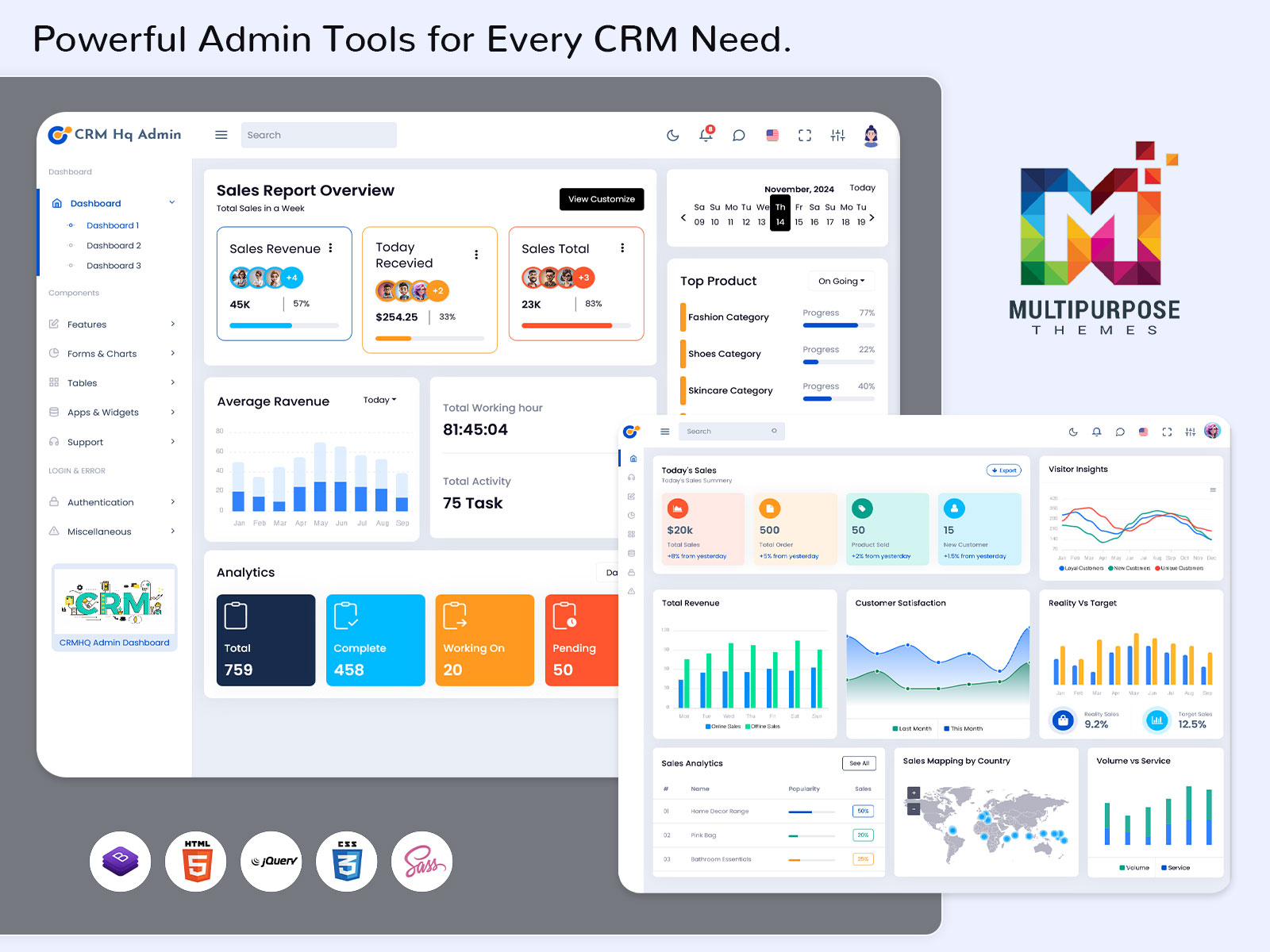
In today’s fast-paced business environment, staying on top of customer relationships is crucial. A CRM dashboard is a pivotal tool that offers a visual interface to monitor and manage these relationships effectively.
Customizable CRM dashboards are not just about aesthetics. They are powerful instruments that allow businesses to tailor their data view according to specific needs. By integrating various data points, these dashboards provide an at-a-glance overview of customer interactions, sales performance, and more, transforming raw data into actionable insights.
Enhancing Business Operations through Customization
Imagine having a control center where all your customer data is dynamically displayed, analyzed, and updated in real-time. This is what customizable CRM dashboards offer. Customization allows businesses to prioritize the metrics that matter most to them, ensuring that every decision is data-driven and strategic.
Different industries leverage these dashboards uniquely, adapting features to their specific operational needs. This flexibility not only enhances productivity but also significantly improves customer service, aligning with business goals and customer expectations.
CRM Dashboard Utilization Across Industries
Below is an illustration of how various industries utilize CRM dashboards to streamline their operations and maximize efficiency:
| Industry | Dashboard Utilization |
|---|---|
| Retail | Track sales performance, customer purchase history, and inventory levels. |
| Healthcare | Monitor patient interactions, appointment schedules, and medical histories. |
| Finance | Analyze client portfolios, transaction histories, and market trends. |
| Hospitality | Manage guest preferences, booking data, and service feedback. |
| IT Services | Oversee project timelines, client communication, and support tickets. |
“Data is the new oil, and customizable CRM dashboards are the refineries.”
Key Features of Effective CRM Dashboards
In the dynamic world of business management, CRM dashboards serve as the strategic nerve center, enabling you to turn data into actionable insights. They are not just a collection of numbers; they are the window to your business’s soul.
An effective CRM dashboard equips you with a panoramic view of your customer relationships, helping your team to focus on what matters most. Let’s delve into the essential features that make these dashboards indispensable.
Essential Features of a Customizable CRM Dashboard
To harness the full potential of CRM dashboards, certain features are non-negotiable. These elements are the building blocks of an insightful and responsive dashboard.
- Real-Time Data Updates: Capture the pulse of your business with live data streams.
- Customizable Layouts: Tailor the dashboard to resonate with your unique business needs.
- Interactive Visualizations: Engage with dynamic charts and graphs to uncover trends instantly.
- Role-Based Access: Ensure the right people see the right data at the right time.
- Integration Capabilities: Seamlessly connect with other tools for a holistic view.
Popular CRM Dashboard Elements
Integrating the right elements into your CRM dashboard can significantly enhance its effectiveness. Here are some popular components that businesses frequently utilize:
- Sales Funnel: Visualize your sales pipeline and identify bottlenecks.
- Customer Segmentation: Categorize customers based on behavior, location, and more.
- Performance Metrics: Track key performance indicators like sales growth, customer retention rates, etc.
- Activity Monitor: Keep an eye on interactions and follow-ups to maintain momentum.
- Forecasting Tools: Predict future trends and prepare strategic responses.
Benefits of Real-Time Data Visualization in Dashboards
Real-time data visualization is the heartbeat of an effective CRM dashboard, offering numerous advantages that empower your business to be agile and responsive. With instant insights, your team can make decisions faster, respond swiftly to market changes, and enhance customer satisfaction.
“Having real-time data at your fingertips is not a luxury; it’s a competitive advantage.”
Real-time visualizations also foster a culture of transparency and accountability within the team, as everyone has access to the same up-to-date information. This shared knowledge base can drive collaboration and innovation, paving the way for sustained success.
Customization Options for Business Needs

Every business operates uniquely, and CRM dashboards must reflect this individuality. Tailoring dashboards to meet specific business requirements not only enhances efficiency but also optimizes decision-making processes.
Customization options in CRM dashboards are extensive, ranging from simple layout adjustments to complex data integrations. These options empower businesses to prioritize the data that is most critical to their operations, ensuring that users can access actionable insights at a glance. With the right customization, a CRM dashboard becomes a powerful tool that can drive business success.
Tailoring Your Dashboard: Options and Flexibility
Businesses can transform their CRM dashboards into bespoke solutions that cater to their specific operational needs. This personalization encompasses a variety of options that can be adjusted to fit different business models. Some CRM platforms offer drag-and-drop interfaces, enabling users to easily rearrange elements to suit their workflow. Others provide advanced customization through API integrations, allowing for greater data connectivity and functionality enhancement.
| Customization Feature | Benefits | CRM Examples |
|---|---|---|
| Drag-and-Drop Interface | Quick layout adjustments without technical expertise | Salesforce, HubSpot |
| API Integrations | Seamless data integration from multiple sources | Zoho CRM, Microsoft Dynamics 365 |
| Custom Reports and Analytics | In-depth insights tailored to business objectives | SAP CRM, Oracle CRM |
Your CRM should not just be a data repository but a dynamic reflection of your business’s needs and strategies. By leveraging customization options, you ensure that your dashboard is not only informative but also a catalyst for growth.
User-Friendly Interfaces Enhance Customization
The impact of a user-friendly interface on CRM dashboard customization cannot be overstated. An intuitive design empowers users at all levels of technical expertise to make the most of customization features. This accessibility ensures that everyone in the organization can contribute to and benefit from a personalized CRM dashboard.
With a user-friendly interface, tasks like adding new widgets, altering chart styles, or setting up alerts become straightforward. This ease of use encourages frequent updates and optimizations, keeping the dashboard aligned with evolving business needs. As a result, businesses can maintain agility and responsiveness in a competitive market.
“A well-designed dashboard is not a final product but a living tool that evolves with your business.”
Ultimately, the combination of robust customization options and a user-friendly interface creates a potent CRM solution that drives informed decision-making and business growth.
Best Practices for Designing CRM Dashboards

Welcome to the art of crafting intuitive and impactful CRM dashboards that empower business decisions. In this section, we embark on a journey to explore the nuances of designing user-centric dashboards that are both functional and aesthetically pleasing.
Creating a CRM dashboard is not just about data visualization; it’s about telling a story that resonates with users. Our aim is to ensure that your dashboards become indispensable tools for insight and action, steering business strategies towards success.
Organizing Your Dashboard: The Art of Clarity and Functionality
A well-organized dashboard is the cornerstone of effective data interpretation. To achieve this, start by understanding your audience’s needs and the ultimate purpose of the dashboard. Group related metrics together and ensure that the layout is intuitive. A clutter-free interface, with a clear hierarchy of information, guides users effortlessly through the data.
Do’s and Don’ts for Designing User-Centric Dashboards
Crafting a dashboard that resonates with users requires attention to detail and an understanding of user experience principles. Below is a list to steer your design process:
- Do: Keep it simple and focused on user needs.
- Do: Use color strategically to highlight important data.
- Do: Ensure mobile responsiveness for on-the-go access.
- Don’t: Overwhelm users with too much information at once.
- Don’t: Use inconsistent chart types or colors that confuse the audience.
- Don’t: Neglect feedback from users – it’s invaluable for improvement.
Remember, a great dashboard is not just about data; it’s about delivering an experience that empowers users to act confidently.
Maintaining Consistency Across Your Dashboard Design
Consistency is the golden thread that ties a dashboard together, making it coherent and user-friendly. This involves a uniform use of colors, fonts, and visual components across all dashboards. Consistency builds trust and familiarity, enhancing user engagement and comprehension.
“Consistency is the key to unlocking a seamless user experience.”
To maintain this, develop a style guide for your dashboards. Ensure all team members adhere to it, and periodically review the dashboards to keep them aligned with the guide. This practice will help in sustaining a professional look while making future updates seamless and efficient.
Case Studies and Success Stories

Imagine unlocking the full potential of your business with dashboards tailored to your every need. That’s exactly what these businesses achieved with customizable CRM dashboards. Let’s delve into their journeys.
Through these case studies, you’ll witness transformative changes that stem from leveraging CRM dashboards to their fullest potential. Join us as we explore the strategies implemented and the remarkable results obtained.
Real-World Success with Custom Dashboards
One of the standout companies, ABC Logistics, saw a 30% increase in operational efficiency just months after implementing a customized CRM dashboard. They initially struggled with data visibility, a common challenge among growing businesses. By tailoring their dashboards to offer real-time tracking and intuitive data visualization, ABC Logistics streamlined their workflow significantly.
In another compelling example, GreenTech Solutions harnessed the power of CRM dashboards to enhance customer engagement. The customized dashboards enabled their sales teams to access targeted insights, leading to a 25% boost in sales conversions within the first quarter of use. Such results highlight the immense potential of personalized CRM tools.
Lessons Learned from CRM Dashboard Implementations
These case studies provide valuable lessons that can guide your own CRM dashboard journey. Consider the following insights gleaned from their experiences:
| Lesson | Description | Outcome |
|---|---|---|
| Embrace Flexibility | Adapt the dashboard to evolving business needs. | Increased adaptability and resilience in dynamic markets. |
| Data Centralization | Integrate all data sources into a single dashboard. | Improved decision-making through comprehensive insights. |
| User Training | Invest in training employees to utilize dashboard features effectively. | Enhanced user competency and maximized tool utility. |
As we reflect on these success stories, it’s clear that the strategic use of customizable CRM dashboards can lead to substantial business transformation. The journey from data chaos to clarity is not just a possibility, but a reality achieved by many.
Future Trends in CRM Dashboard Customization
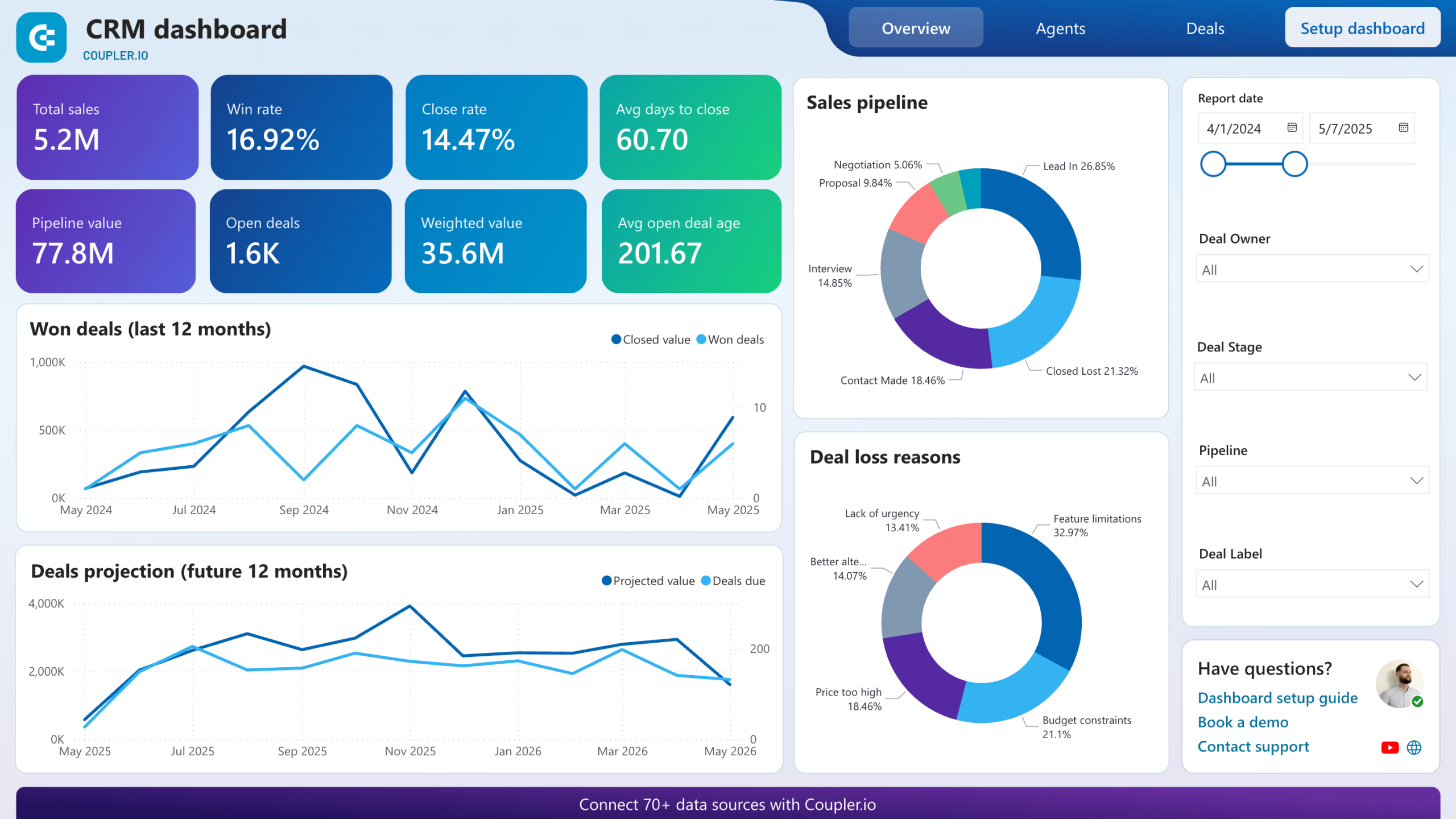
As businesses continue to evolve, so does the technology that supports them. The future of CRM dashboard customization is poised to offer unprecedented capabilities, empowering businesses to tailor their interaction strategies like never before.
With advancements in technology, CRM dashboards will not only become more intuitive but also more integrated, allowing for seamless business operations. These changes promise to revolutionize how businesses interact with data and make strategic decisions.
Integration of AI and Automation
The integration of Artificial Intelligence (AI) and automation into CRM dashboards is set to redefine how businesses operate. These technologies will enable real-time data analysis, predictive insights, and automated customer interactions, resulting in increased efficiency and a more personalized experience for users. Imagine a dashboard that not only displays data but also suggests actions based on real-time analytics.
Enhanced Customization Features
Future CRM dashboards will offer enhanced customization features, allowing users to create bespoke interfaces that align perfectly with their operational needs. Expect to see dashboards that can adapt in real-time, offering drag-and-drop widgets, custom reporting modules, and flexible data visualization options that can be tailored to niche business strategies.
Impact on Business Strategies
These emerging trends in CRM dashboard customization will necessitate a shift in business strategies. Companies will need to leverage these tools to stay competitive. The ability to quickly adapt dashboards to ever-changing business landscapes will enable organizations to make informed decisions swiftly, leading to more agile and responsive business practices.
“The future of CRM dashboards lies in their ability to evolve with the business, offering real-time insights and automated processes to drive growth.”
Last Word
As we stand on the brink of a new era in business intelligence, customizable CRM dashboards are poised to revolutionize the way organizations approach data. By embracing the flexibility and innovation they offer, businesses can harness the full potential of their data, translating it into a powerful competitive edge. The future of CRM dashboards is not just about technology; it’s about transforming the way we think, operate, and succeed in the business world.